
News

Digital Rights Summer School 2026: Demystifying AI
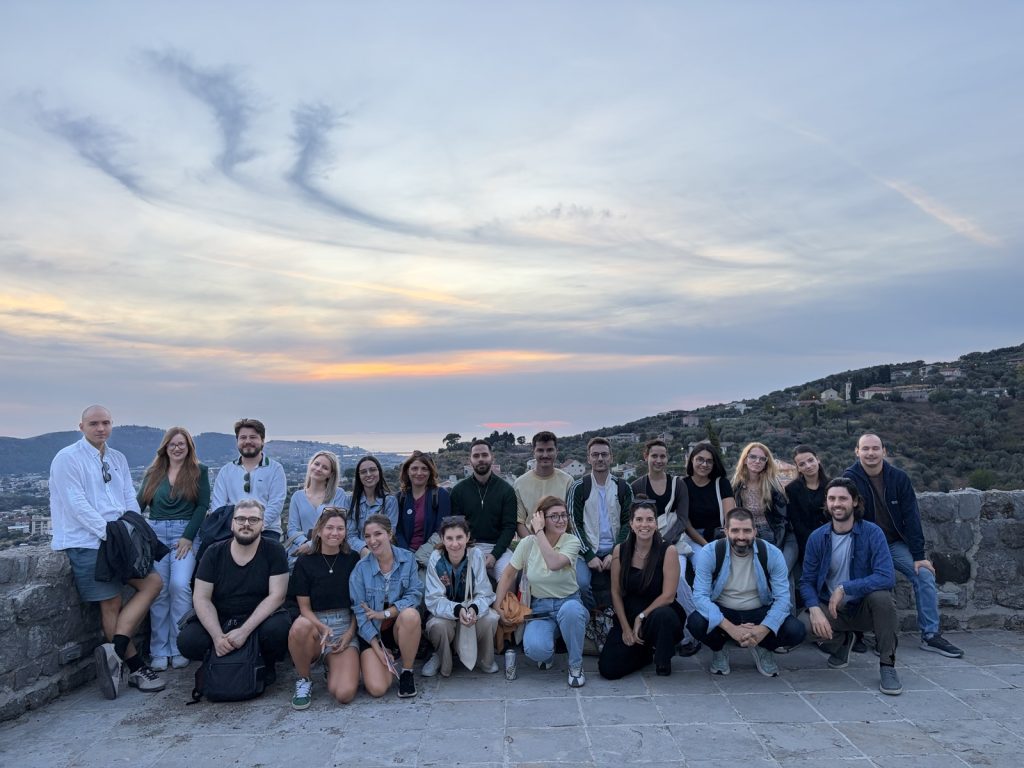
This year’s Digital Rights Summer School was hosted in Petrovac, Montenegro from 21 to 25 September, bringing together more than 20 journalists, activists, and researchers for an intensive week of learning and dialogue. Held in the Red Commune Museum, the program tackled urgent questions about artificial intelligence and its far-reaching implications for society.
The participants learned how machine learning and generative AI systems function, explored different types of automated technologies, and examined their common failure modes. A key focus was identifying points of human choice and responsibility within systems often presented as autonomous. The sessions also examined resources and dependencies underpinning AI development, analyzing how business models and power concentration shape which technologies are deployed in different societies. Critical analysis of the dominant narratives around AI and technology and tracing how they serve particular interests was also covered.
The School also explored AI-enabled surveillance technologies and their interconnections, helping participants recognize deployment patterns and function creep within their own countries. Discussions extended beyond privacy to examine how surveillance impacts broader rights.
The current Western Balkans landscape of surveillance, online harassment, and information ecosystems across the region, examining how weak enforcement, media capture, and political pressure on civil society enable digital rights violations was one of the aspects of the Summer School which helped participants better understand their local challenges.
One of the key topics was Foreign Information Manipulation and Interference (FIMI). The participants learned how to map foreign and domestic actors, objectives, vulnerabilities, channels, and tactics involved in coordinated influence operations, which increasingly leverage AI-generated content alongside traditional media operations and coordinated networks.
In addition, the program examined how emerging technologies like generative AI can intensify gender-based violence, and explored how platform design policies and response mechanisms shape experiences of digital harm.
On the policy level, the Summer School covered the EU AI Act and the Council of Europe Framework Convention on AI, equipping participants with knowledge of key prohibitions, obligations, and commitments shaping contemporary AI governance.
The Digital Rights Summer School 2026 was made possible with support from Deutsche Gesellschaft für Internationale Zusammenarbeit (GIZ) GmbH.
Related content

Digital Rights Summer School: Where Is AI Leading Us
The second Digital Rights Summer School was held from July 23rd to 29th in Perast, Montenegro, with more than 50 participants and lecturers coming together to exchange and acquire knowledge about current issues at the intersection of society, technology, and human rights. The Digital Rights Summer School is organised by the SHARE Foundation in cooperation with the European […]
31. August, 2023.

Summer School: Challenges of regulating the digital environment
The third Digital Rights Summer School was held from 25 to 31 August in Perast, Montenegro, gathering more than 40 journalists, activists and experts in the fields of AI, media, human rights, surveillance, and digital policy. During five days of talks and workshops, numerous issues regarding the regulation of the digital environment were discussed and […]
20. October, 2024.
EU proposal of the AI regulation adopted
Late into the night on Friday, December 8, the lengthy negotiations on the final version of the EU artificial intelligence regulation (AI Act) were concluded, with the first of a dozen technical meetings expected this week to specify the details of the law’s implementation. According to initial reactions, the adopted solutions did not fully meet the expectations of […]
15. December, 2023.